 Image 1 of 1
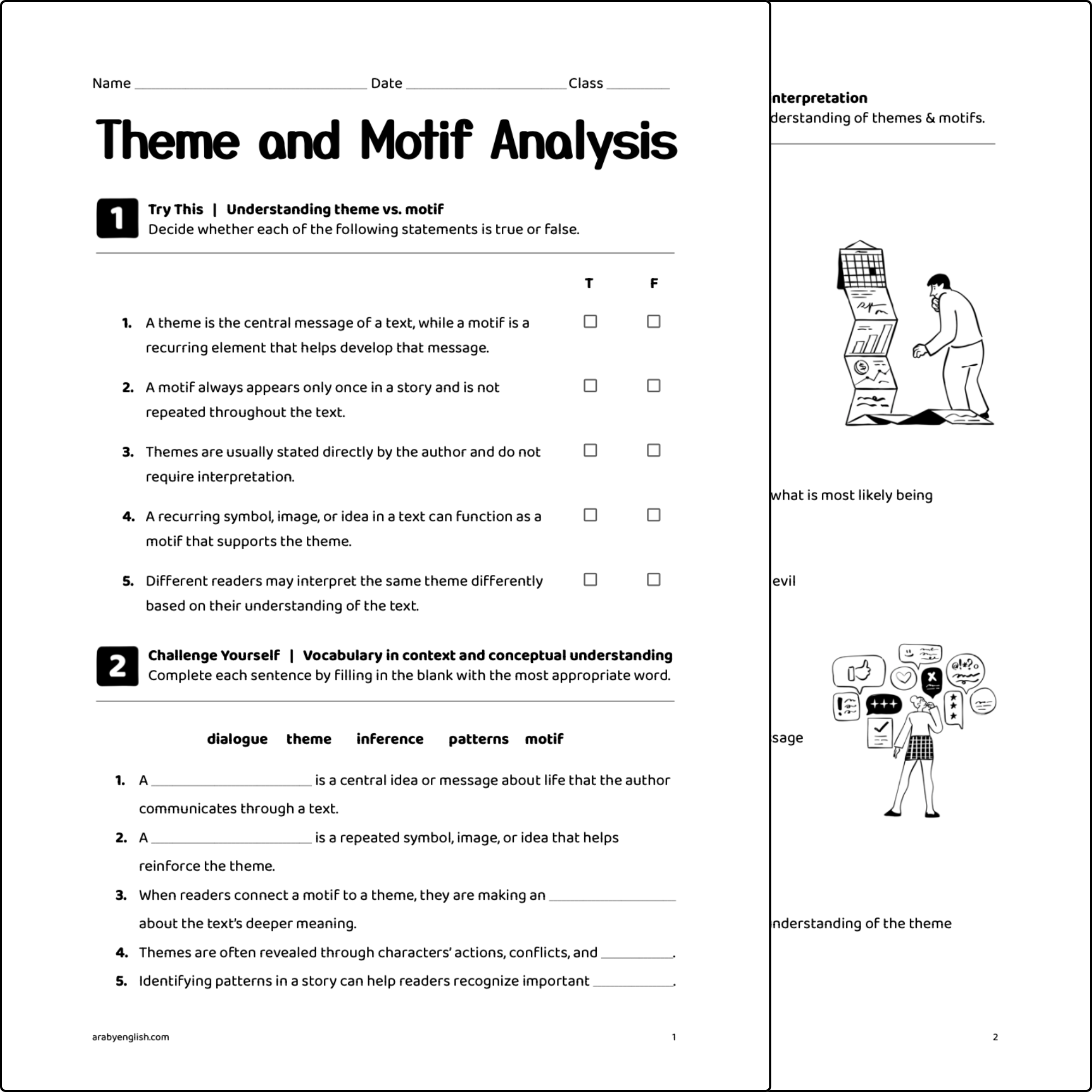
This Theme and Motif Analysis Worksheet for Grades 9-10 helps students develop essential literary analysis skills by identifying central themes and analyzing how motifs reinforce meaning. Through a variety of activities, including true/false, fill-in-the-blanks, multiple choice, and open-ended responses, students practice inference, interpretation, and critical thinking. The worksheet is aligned with CCSS, CEFR, ACARA, and Cambridge standards and includes a detailed answer key for effective instruction and independent learning.
“Theme is what a story means; motif is what keeps reminding us of that meaning.”
Skill Focus
1. Identifying themes and motifs in literary texts.
2. Analyzing how recurring elements support central ideas.
3. Making inferences based on textual details.
4. Explaining connections using relevant textual evidence.
Standards Alignment
✦ CCSS
RL.9-10.2: Determine themes or central ideas and analyze their development throughout the text.
RL.9-10.3: Analyze how complex characters, events, and ideas develop and interact.
RL.9-10.4: Determine the meaning of words and phrases, including figurative and symbolic meanings.
✦ CEFR
B1–B2: Understand main ideas, make inferences, and interpret meaning in literary texts.
✦ ACARA
Year 9–10 English: Analyze literary techniques, themes, representations, and ideas within texts.
Literature and Literacy Strands: Interpret and evaluate how language choices shape meaning.
✦ Cambridge
Lower Secondary / IGCSE: Reading interpretation and analysis of themes, symbols, and authorial choices.