 Image 1 of 1
“The greatest enemy of knowledge is not ignorance, it is the illusion of knowledge.”
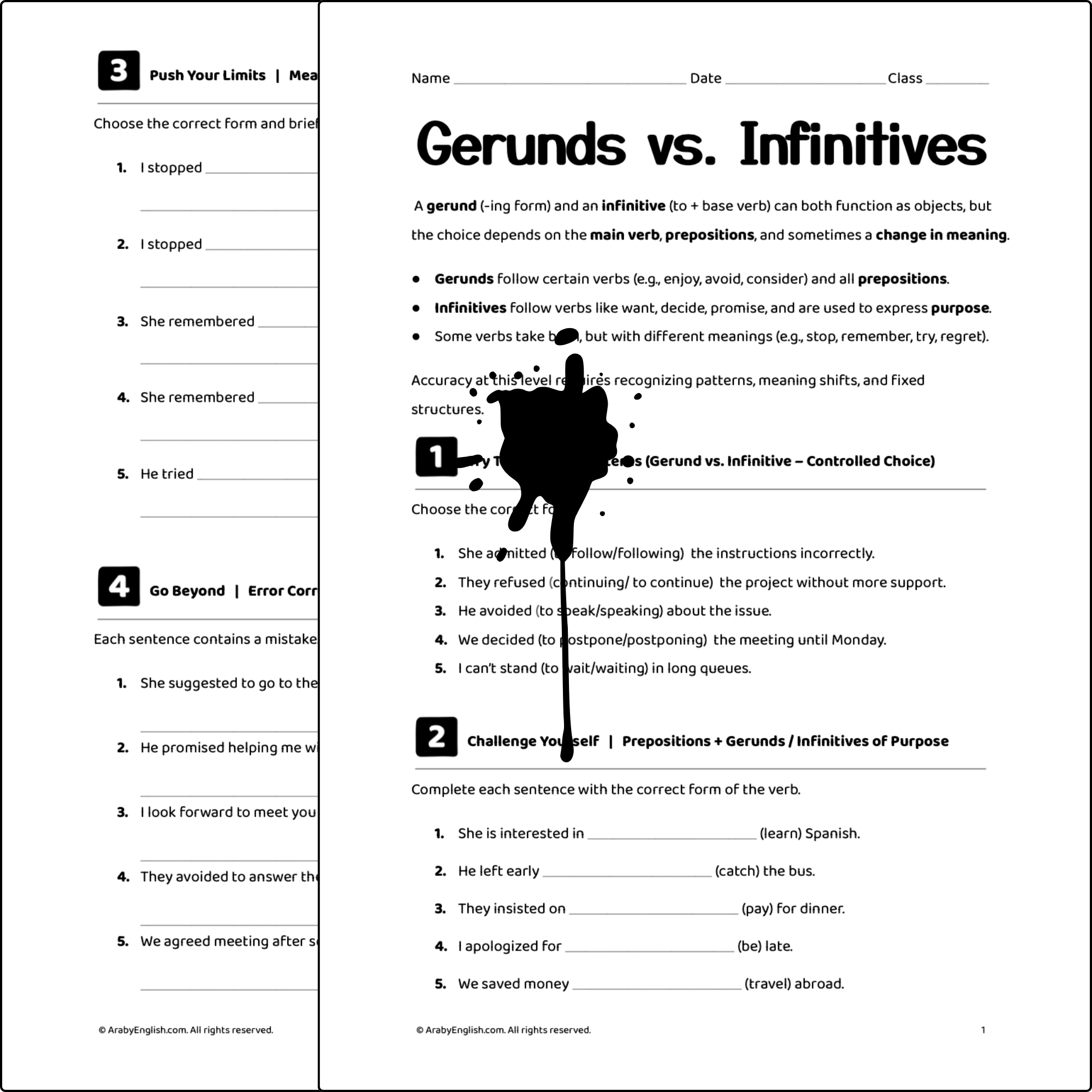
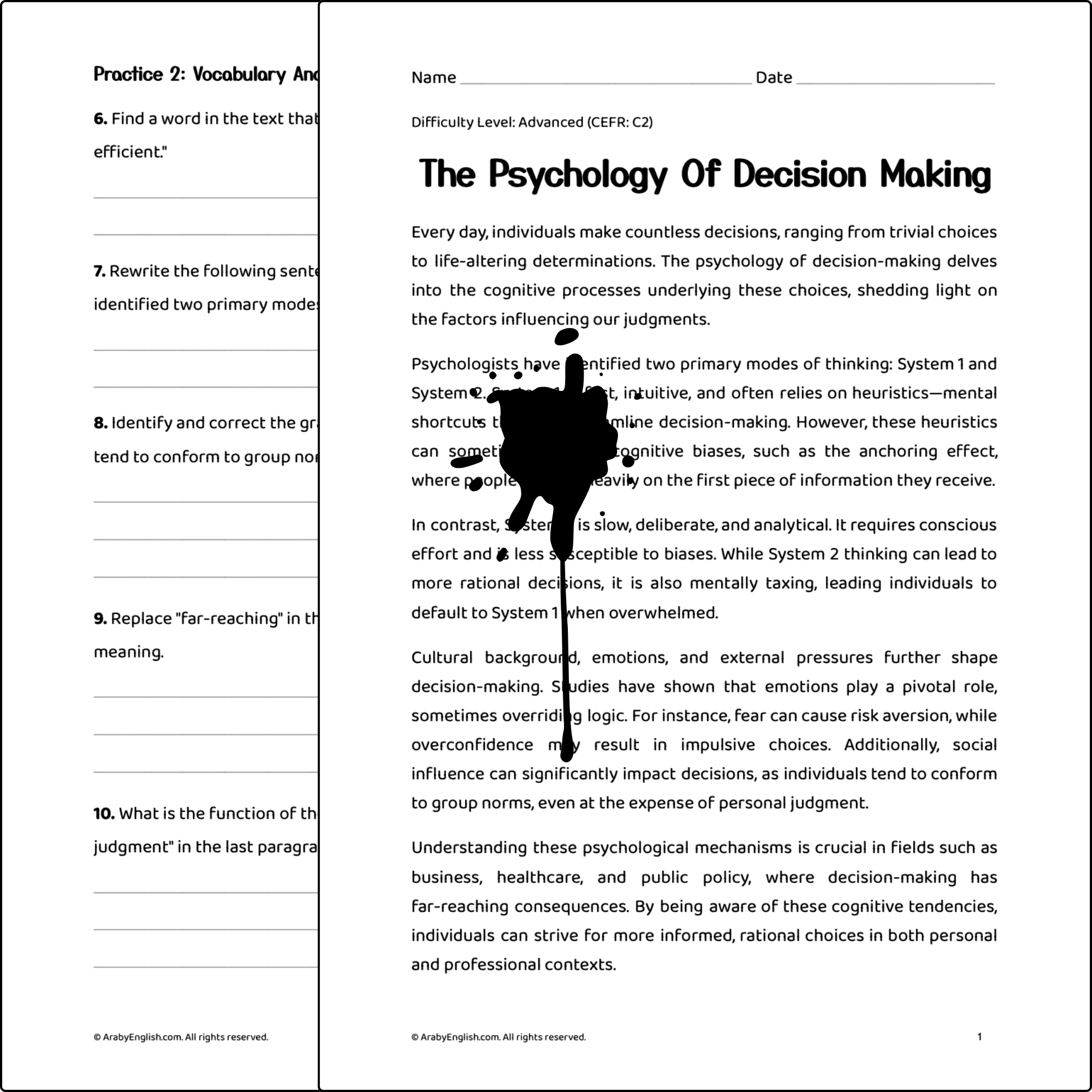
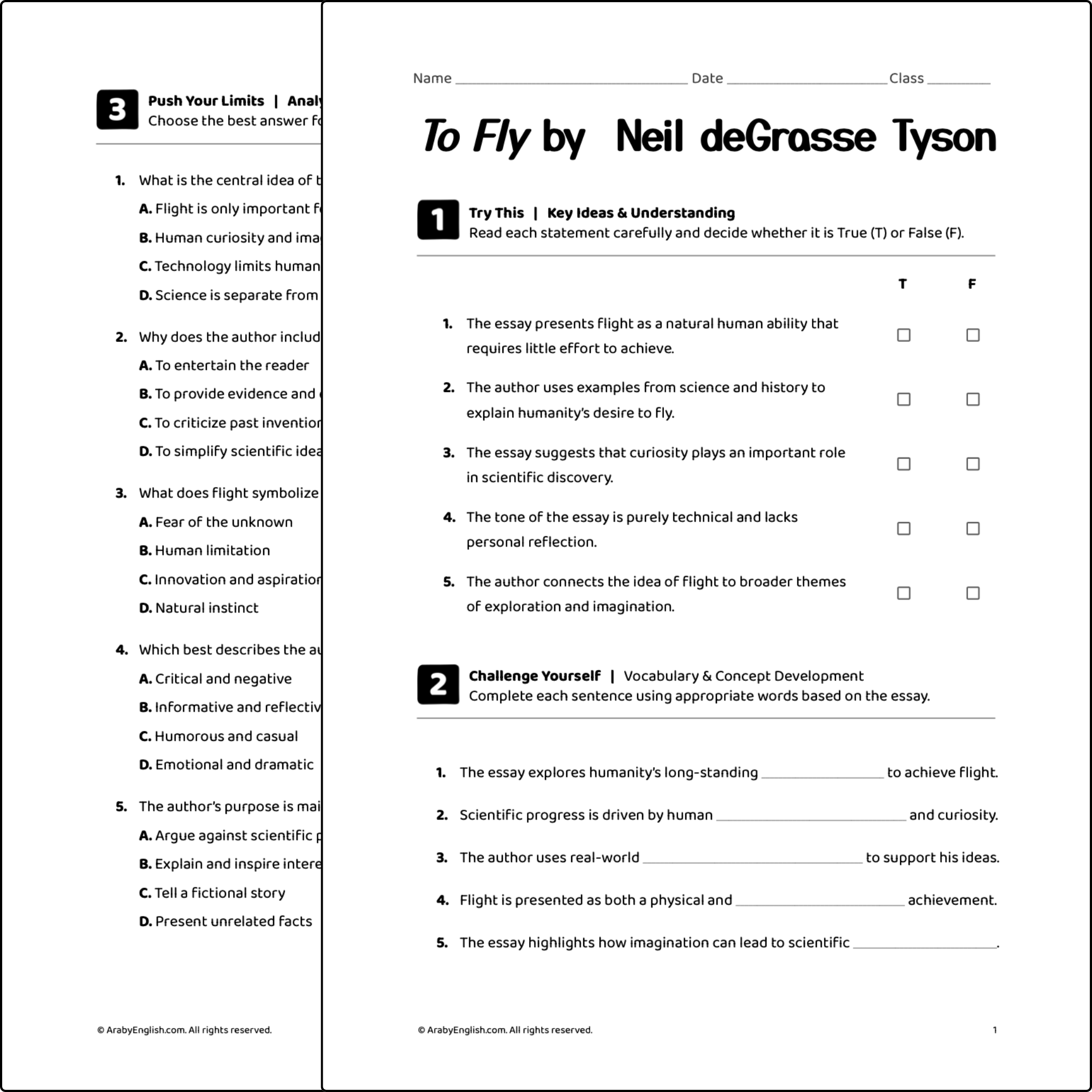
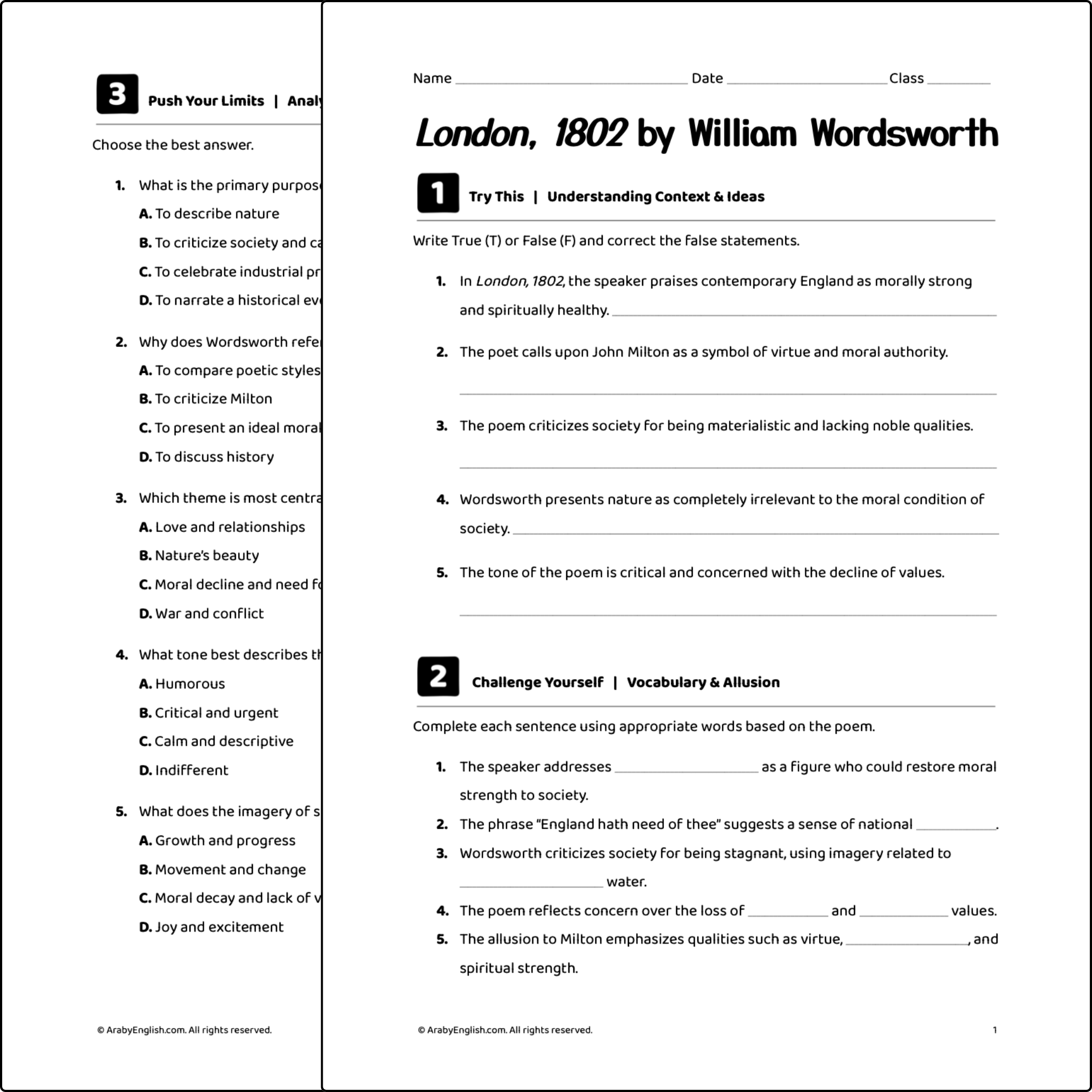
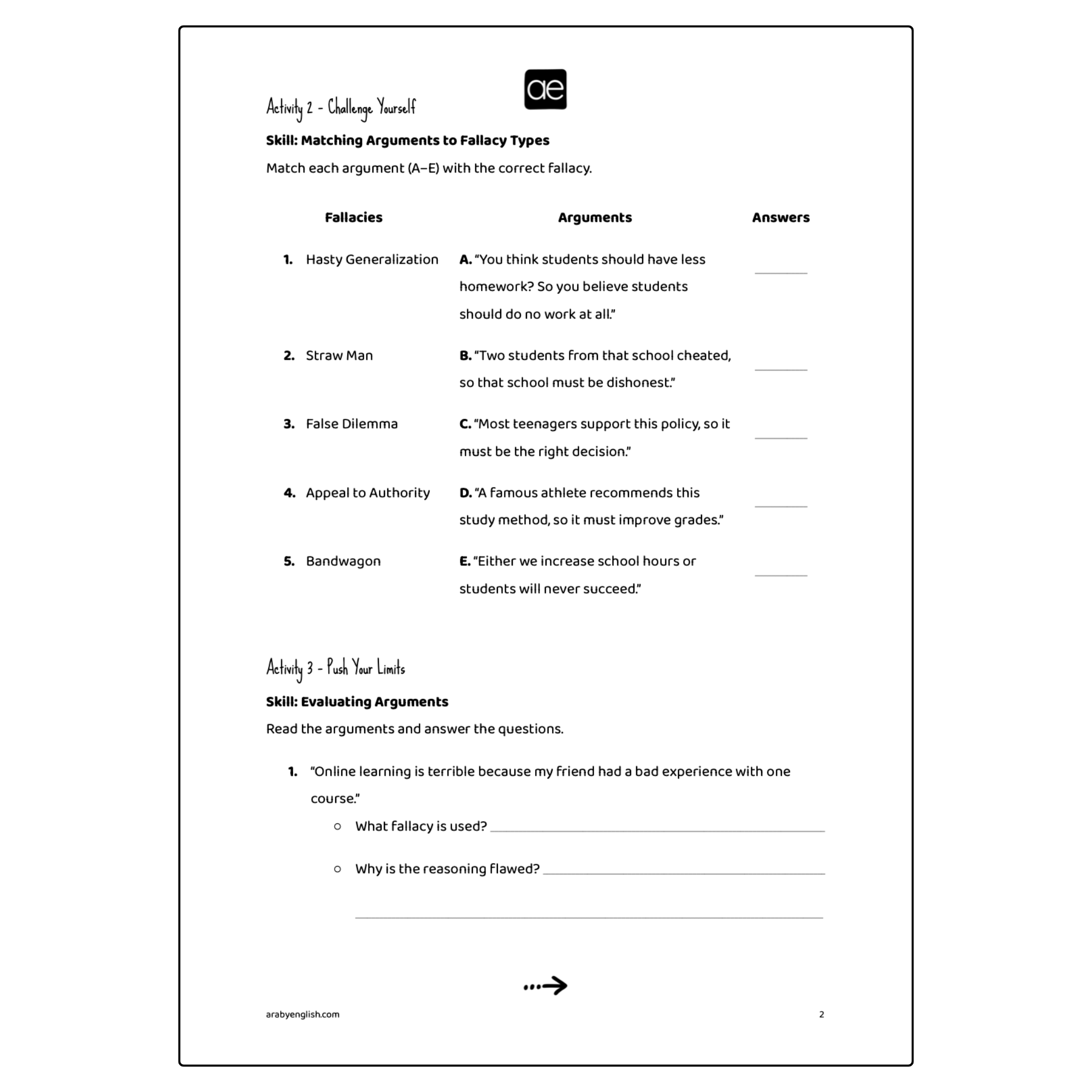
This advanced worksheet helps students develop critical thinking and argument analysis skills by identifying and evaluating logical fallacies commonly found in persuasive arguments. Students analyze flawed reasoning, match arguments with fallacy types, explain why arguments are logically weak, and rewrite statements to strengthen reasoning. The worksheet includes differentiated activities—Try This, Challenge Yourself, Push Your Limits, and Go Beyond—to gradually deepen analytical skills. It is suitable for Grades 11–12 learners and aligns with CCSS, CEFR C1–C2, ACARA, and Cambridge standards for evaluating reasoning and analyzing arguments in complex texts.
Additional Info:
Grade Level: Grades 11–12
Difficulty Level: Advanced
Skill Focus: Identifying and analyzing logical fallacies in arguments
Standards and Strands:
CCSS (Common Core State Standards)
RI.11-12.8: Evaluate the reasoning in seminal U.S. texts, including the application of constitutional principles and use of legal reasoning.
W.11-12.1: Write arguments to support claims with clear reasoning and relevant evidence.
CEFR (C1–C2): Can critically evaluate arguments and identify implicit assumptions and flawed reasoning in complex texts.
ACARA (Australian Curriculum): English: Language for interaction and text analysis (ACELA1566 / ACELY1754) — Analyze how language choices shape meaning and influence audiences.
Cambridge English: Advanced reading and critical analysis skills aligned with Cambridge Advanced (C1) and Proficiency (C2) exam competencies.