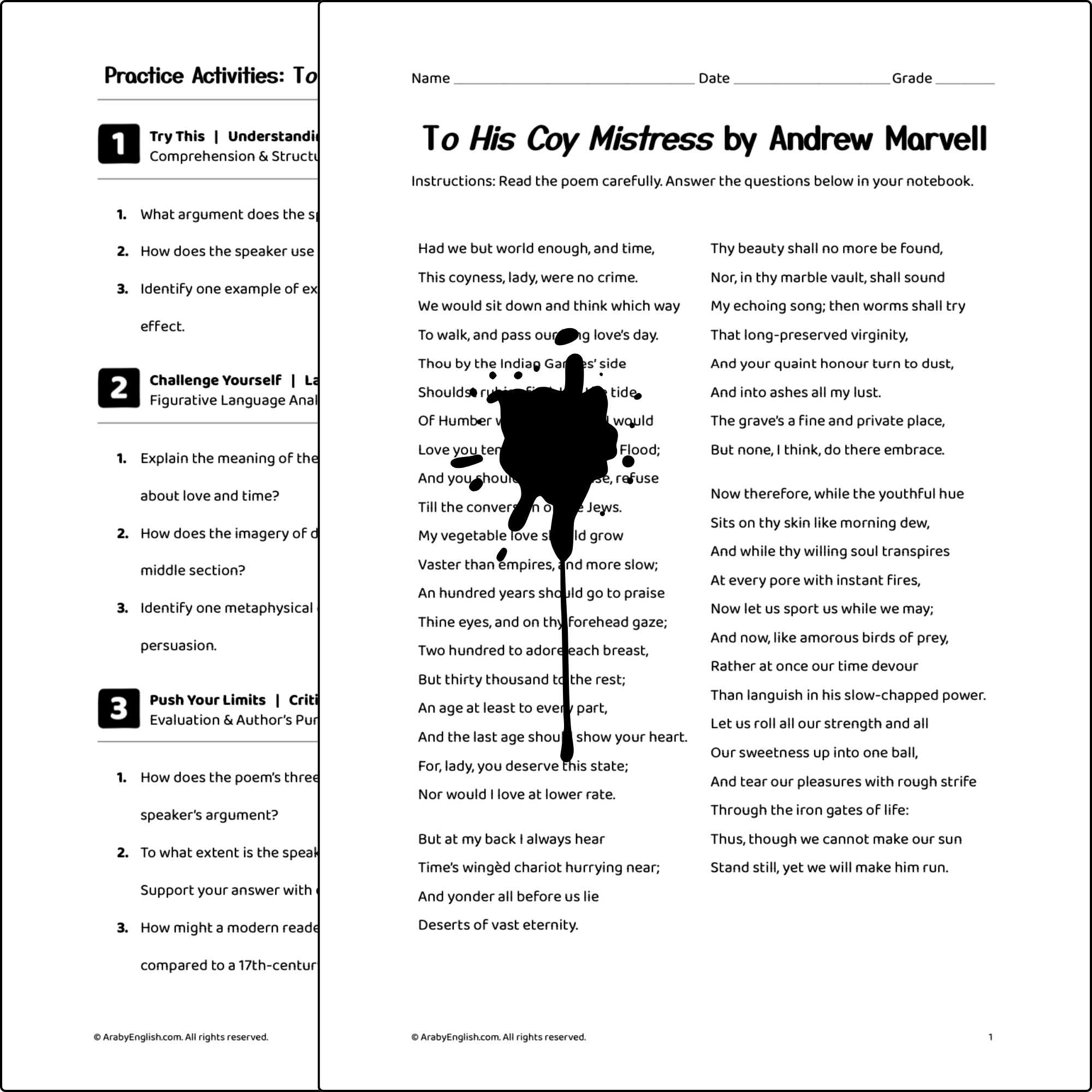
 Image 1 of 2
 Image 2 of 2
“Had we but world enough, and time,
This coyness, lady, were no crime.”
This worksheet develops students’ ability to analyze how poetic form, imagery, and rhetorical strategies contribute to meaning. Students examine how Marvell constructs an argument using metaphysical conceits, shifts in tone, and logical progression to persuade the speaker’s audience. It guides students through a close analysis of Andrew Marvell’s To His Coy Mistress, focusing on poetic argument, imagery, tone, and persuasive techniques characteristic of metaphysical poetry. Aligned with CCSS, CEFR (C1–C2), and Cambridge standards, the worksheet includes differentiated practice tasks that move from comprehension to critical evaluation, along with a complete answer key to support independent or classroom use.
Additional Info:
Difficulty Level: Advanced (CEFR C1–C2)
Skill Focus: Analyzing poetic argument, imagery, tone, and persuasive techniques in metaphysical poetry.
Standards & Curriculum Alignment:
CCSS (Grades 11–12):
RL.11-12.1: Cite strong and thorough textual evidence to support analysis.
RL.11-12.4: Analyze the impact of figurative language, imagery, and tone.
RL.11-12.5: Analyze how an author’s structural choices contribute to meaning.
CEFR:
C1 Reading: Understand demanding literary texts and recognize implicit meaning.
C2 Reading: Analyze complex literary works, including rhetorical and stylistic features.
Cambridge English (Upper Secondary / Advanced):
Analysis of writer’s purpose, tone, and style
Evaluation of how language choices shape meaning in literary texts